Screen Printing
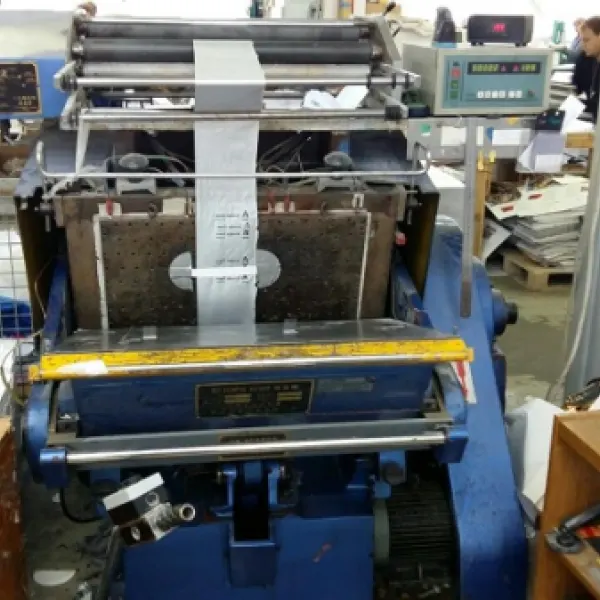
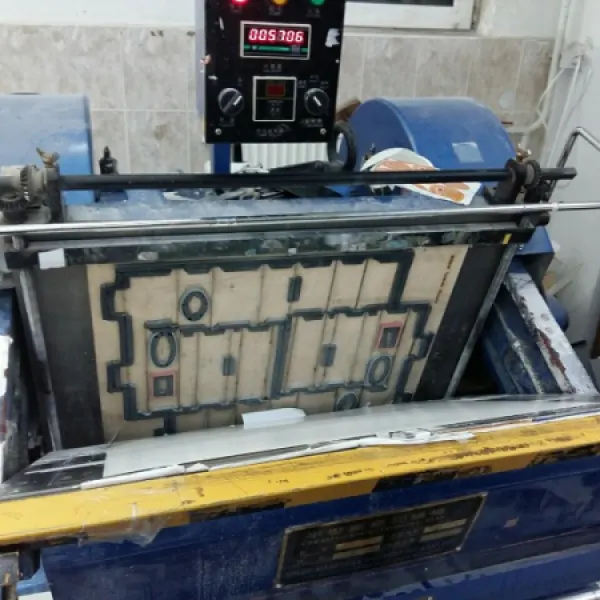
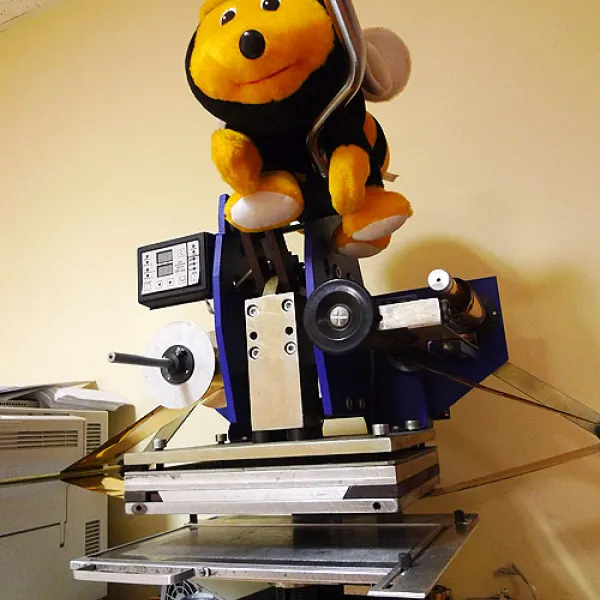
Ink pushed through a mesh screen forms a dense colour layer even on dark materials — from thick board to paper of varied textures.
Printing
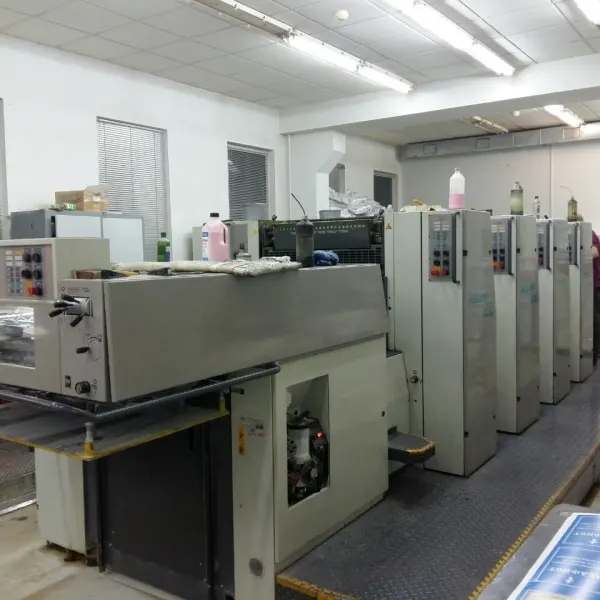
Thanks to RIP processing, artwork needs far less prep than offset, and sheets up to A3 are printed without making plates.
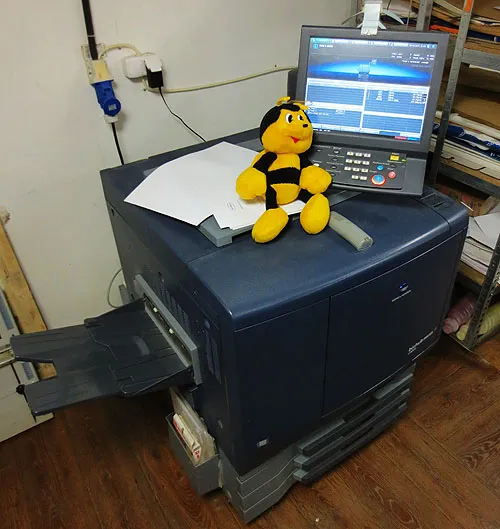
Digital printing is produced in the same way as on an ordinary laser printer. By and large, «digital» printing is essentially an ordinary laser printer with some differences from «desktop» ones.
Preparing the artwork:
In digital printing, the requirements for artwork are not as «strict» as for offset, screen printing and other types of printing, as well as for post-press processes. This is due to special software installed on a computer that is an integral part of the printer (the so-called RIP).
Differences from «simple office/home» printers:
Print format: as a rule, the paper size used is A3, but in practice it is more sensible to use B3 for the main types of products. Available formats (in mm) A3: 297x420; B3: 320x450; A4: 210x297; B4: 225x320 and other formats within these limits, including printing on envelopes of various standards. Other formats used vary in size depending on the manufacturer of the digital press; for example, there is a format extended in length: 225x560 mm (convenient for calendars in small runs).
Enlarged formats (B4, B3) are needed because, in addition to the product itself, technological marks (cutting, creasing, registration marks for the front and back of the print, etc.) are placed on the printing sheet, as well as bleed margins for trimming: that is, if a business card after trimming has a format of 90x50 mm, then it is printed at a format of 94x54 mm (2 mm on each side goes to trimming).
Density of the materials used: from 60 g/m2 paper (carbonless) up to 300 g/m2 (business cards, folders, covers).
Texture of the materials used: the papers and cardboards used in digital printing differ not only in density and colour, but also in thickness and texture. The texture is a kind of pattern that is an inseparable part of a particular material (paper/cardboard).
Duplex, or double-sided printing: any professional printer has the ability to print on both sides. This capability means double-sided printing in a single pass through the printer on one sheet of paper without human involvement (which clearly increases production speed).
Printing speed: professional printers are designed for a larger number of copies produced, which means more copies per minute, unlike office/home printing devices.
Post-press: some versions of digital presses offer the additional option of installing equipment for post-press processes, such as: saddle stitching, trimming (which, in turn, helps optimise the production speed of the final product and the effort required from the print shop staff).
Cost price: in this case the following principle applies: the larger the initial investment, the lower the cost price of each printed impression.
Features:
Digital printing has become widespread for low-volume products, as well as for products needed in the shortest possible time (so-called «rapid» printing).
At present, it makes sense to use «digital» printing for products in runs of up to 500 copies in A3 format. These are business cards, «flyers», folders, covers for brochures, books, magazines and much more.
See also:
Request a quote
Fill in the form — we will get back to you shortly with a price for your order.
Equipment
Our works


Printing
Ink pushed through a mesh screen forms a dense colour layer even on dark materials — from thick board to paper of varied textures.
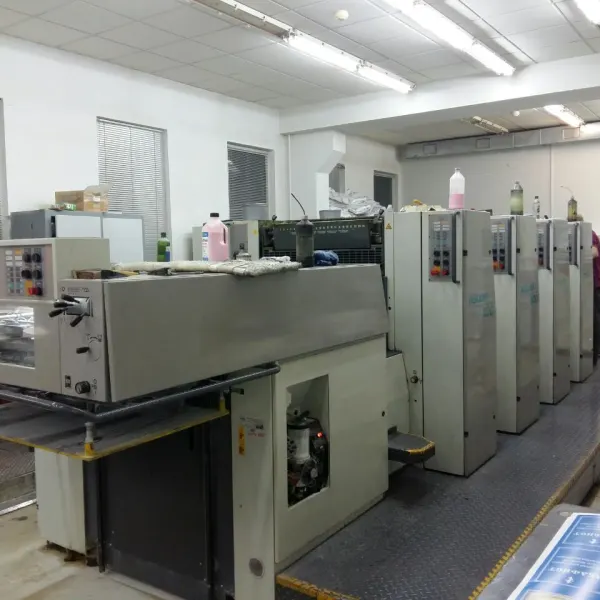
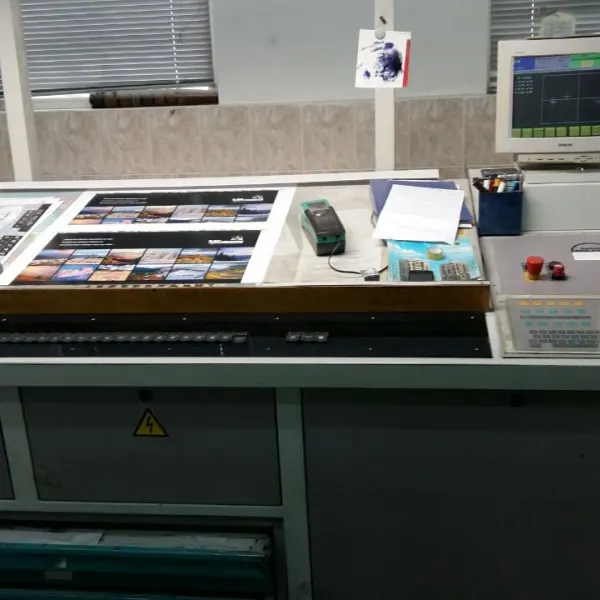
A classic plate-and-blanket process that delivers consistent, vivid colour across a wide range of paper and board stocks.
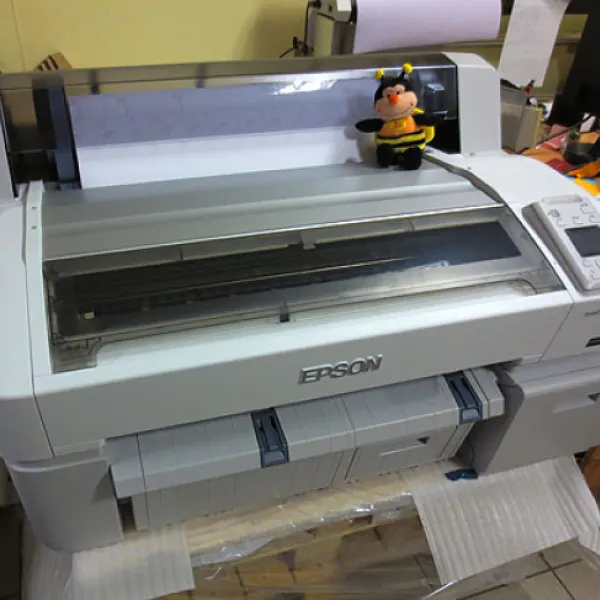
Prints from half a metre to several metres wide on roll media — self-adhesive film, paper and PVC banner fabric — for both outdoor and interior use.
Quote for
Fill in the form — we will get back to you shortly with a price for your order.